
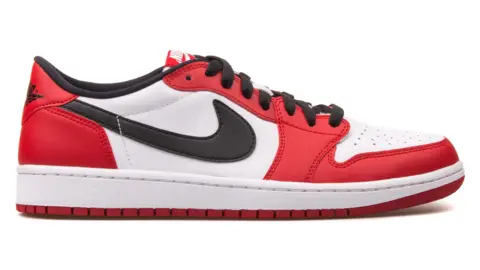
The Nike Air Jordan 1 is, in some ways, the iconic US trainer. It's a popular line by a large American brand, created four decades ago for homegrown basketball legend Michael Jordan.
But although Nike sells most of its products in the US, almost all of its trainers are made in Asia – a region targeted by President Donald Trump's tariffs salvo against foreign countries he accuses of "ripping off" Americans.
Nike's shares fell 14% the day after the tariffs announcement, on fears over the impact they could have on the company's supply chain.
So what will all this mean for the price of Nike's trainer?
It depends on how much of the cost increase Nike decides to pass on to customers, if any, and how long they think the tariffs will actually be in place for.
'Competitive industry'
Goods from Vietnam, Indonesia and China face some of the heaviest US import taxes - between 32% to 54%.
Hopes remain that Trump might be willing to negotiate those rates lower. On Friday, he said he had had a "very productive" call with the leader of Vietnam, helping Nike shares to recover some ground after their steep Thursday falls.
But most analysts think the firm's prices will have to go up.
Swiss bank UBS estimates that there will be a 10% to 12% increase in the prices of goods that come from Vietnam - where Nike produces half of its shoes.
Meanwhile, Indonesia and China account for almost all of the balance of its trainer production.
"Our view is that, given how extensive the list of tariffs is, the industry will realise there are few ways to mitigate the impact in the medium term other than by raising prices," UBS analyst Jay Sole said in a note.
David Swartz, senior equity analyst at Morningstar, agrees that price rises are likely but says any large price increase would reduce demand.
"This is a very competitive industry. My guess is that it would be difficult for Nike to raise prices by much more than 10-15%. I don't think it could offset most of the tariff," he says.


0 Comments