
 Getty/Dave Benett
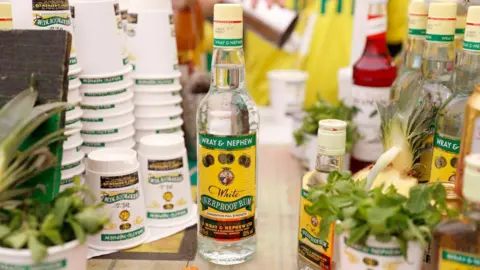
Rum is a key part of Jamaica's cultural identity, but what exactly makes a rum Jamaican?
That question is at the centre of a dispute that is continuing to rumble on the Caribbean island, as some producers wish to strengthen rules on what can, and cannot, be called "Jamaica rum".
In October of last year, Jamaica's Intellectual Property Office (JIPO) approved amendments to the geographical indication (GI) designation for Jamaica Rum that was originally set up in 2016. The biggest change is that ageing the rum overseas is now prohibited.
The amendment was called for by the Spirits Pool Association (SPA), the trade organisation that seeks to speak as a single voice for Jamaica's six rum distilleries - Appleton (which is owned by J Wray and Nephew), Clarendon, Hampden Estate, Long Pond, New Yarmouth and Worthy Park Estate.
The SPO's argument is that a stronger GI is needed for the appellation to be officially recognised in its two key export markets – the EU and the US.
It says this would give Jamaican rum better protection against competitors, and lead to more drinkers recognising it as a premium product made to high specifications in a certain geographic location.
But the amendment has caused quite a stir in Jamaica, because one of the biggest producers claims it would put it out of business.
This company, National Rums of Jamaica (NRJ), owns Long Pond and 73% of Clarendon. NRJ is comprised of three shareholders – the government of Jamaica, Demerara Distillers of Guyana and the Barbados-based West Indies Rum Distillery (Wird).
The key factor is that Wird has since 2017 been owned by French spirits firm Maison Ferrand. Its business model relies heavily on exporting rum in bulk and ageing overseas - something not allowed under Jamaica's new GI.
It argues that rum aged outside of Jamaica is still Jamaican rum, and that the island has exported and aged rum abroad for centuries.
And so, the NRJ is appealing the ruling of JIPO, with a hearing scheduled for 28 April.
 Getty Images
The Spirits Pool Association says that Wird only started to have issues with the geographical indication after its takeover by Maison Ferrard.
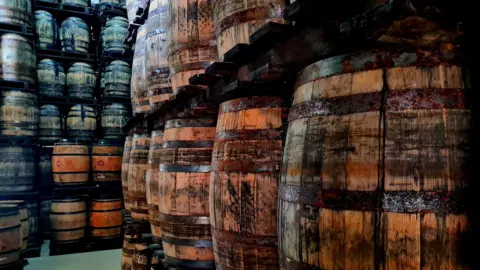
"What we're saying is, if you truly believe in Jamaica rum, age it in Jamaica," says Christopher Gentles, general manager of the SPA.
Rum is typically made by fermenting and then distilling sugarcane molasses, the thick treacle-like substance leftover after refined sugar has been produced from the harvested plants.
Mr Gentles says that ageing the rum before it is sold is of paramount importance, and that doing so outside of Jamaica invalidates the products authenticity and uniqueness. And so, he adds that "we were a little bit puzzled" by the NRJ's objection.
The SPA also points out that exporting and ageing spirits overseas means Jamaica misses out on the value-added processes like refining, bottling, labelling and distributing as well as other secondary benefits to the local economy like rum tourism.
Both the NRJ and Maison Ferrard declined to comment.


0 Comments